August 2026
Specifying BIM Level of Development (LOD): A Practical Guide
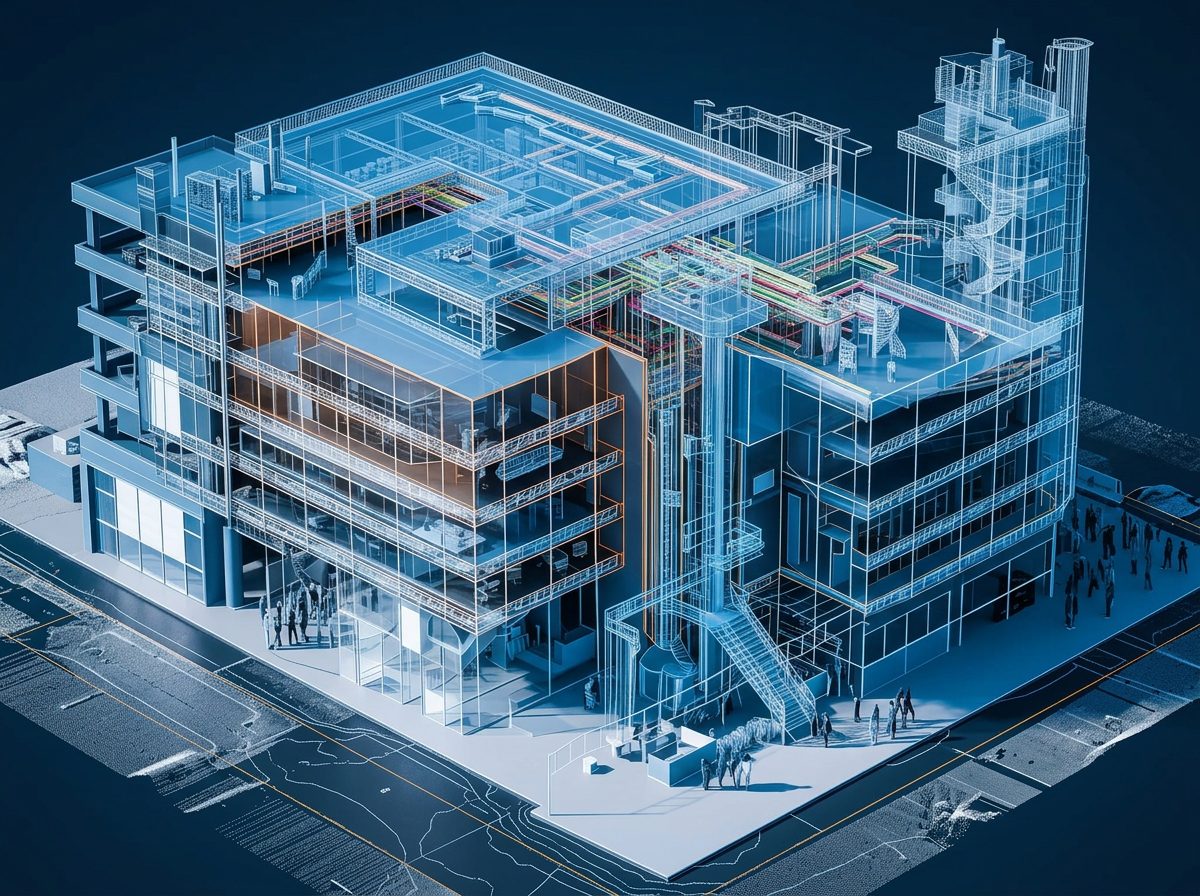
If you're requesting BIM as-built documentation, the single most useful thing you can do is state the Level of Development you need. LOD is the industry's shared vocabulary for how much a model can be relied upon — and specifying it up front prevents both under-delivery and paying for detail nobody will use.
Our standard
Unless a project calls for something different, our deliverables are produced at LOD 300. That means elements are symbolically designated with correct dimensional location, quantity, size, shape, and orientation — accurate enough to design and document against, without the fabrication-level detail that drives cost up sharply.
Where LOD came from
The American Institute of Architects introduced LOD in 2008, defining levels of development to describe detail in a BIM model. Its purpose is communication: LOD tells engineers, designers, and contractors how much they can trust what they're looking at, and where the model's limitations begin. A model without a stated LOD is a model whose reliability nobody can assess.
The LOD scale
LOD 100 — Concept design
A conceptual model. Area, height, volume, location, and orientation are defined. Useful for early massing and feasibility, not for anything you intend to build from.
LOD 200 — Schematic design
Elements modeled with approximate quantity, size, shape, location, and orientation. Non-geometric information can be attached. Appropriate for schematic design and early coordination.
LOD 300 — Detailed design
Accurate modeling suitable for construction documentation. Elements are defined with specific assemblies and precise quantity, size, shape, location, and orientation. This is the level most as-built and renovation projects actually need.
LOD 350 — Construction documentation
Adds detail on how building elements interface with one another and with building systems, with clear graphic and written definitions. Valuable where trade coordination and clash detection matter.
LOD 400 — Fabrication and assembly
Elements modeled as specific assemblies with complete fabrication and installation detail. Specified when the model feeds directly into shop drawings or prefabrication.
LOD 500 — As-built / record model
Elements modeled as constructed assemblies, verified in the field, intended for operations and maintenance. The right choice for facility management and long-term asset records — and the most expensive to produce.
Choosing the right level
A useful rule: specify the lowest LOD that satisfies what the model will actually be used for. Higher levels multiply modeling hours, and a facilities-grade LOD 500 model built for a project that only needed permit drawings is money spent on precision no one will consult.
If you're not sure, describe the decisions the model needs to support and we'll recommend a level. It's a five-minute conversation that routinely saves thousands.
Need an as-built survey for your project? Tell us the property, the area, and the deliverables you need — we'll come back with scope, turnaround, and pricing, usually within one business day.